The food industry is experiencing a profound digital transformation that's reshaping how businesses approach safety and compliance. From farm to fork, technology is creating unprecedented opportunities to enhance food safety, improve operational efficiency, and protect public health.
The Traditional Food Safety Challenge
For decades, food safety compliance has relied heavily on paper-based systems, manual processes, and reactive approaches. Traditional methods, while foundational, present several limitations:
- Human Error: Manual data entry and transcription errors can compromise accuracy
- Limited Visibility: Paper logs provide no real-time insights into operations
- Delayed Response: Issues are often discovered too late to prevent contamination
- Audit Complexity: Gathering and organizing paper records for inspections is time-consuming
- Inconsistent Execution: Varying interpretation of procedures across locations and shifts
The Digital Transformation Wave
The digitization of food safety is not just a trend — it's a fundamental shift that's creating measurable improvements across the industry.
1. Real-Time Temperature Monitoring
Digital temperature sensors and IoT devices now provide continuous monitoring of critical control points. Unlike manual checks that capture snapshots in time, these systems offer 24/7 oversight with automatic alerts when temperatures deviate from safe ranges.
2. Intelligent Digital Checklists
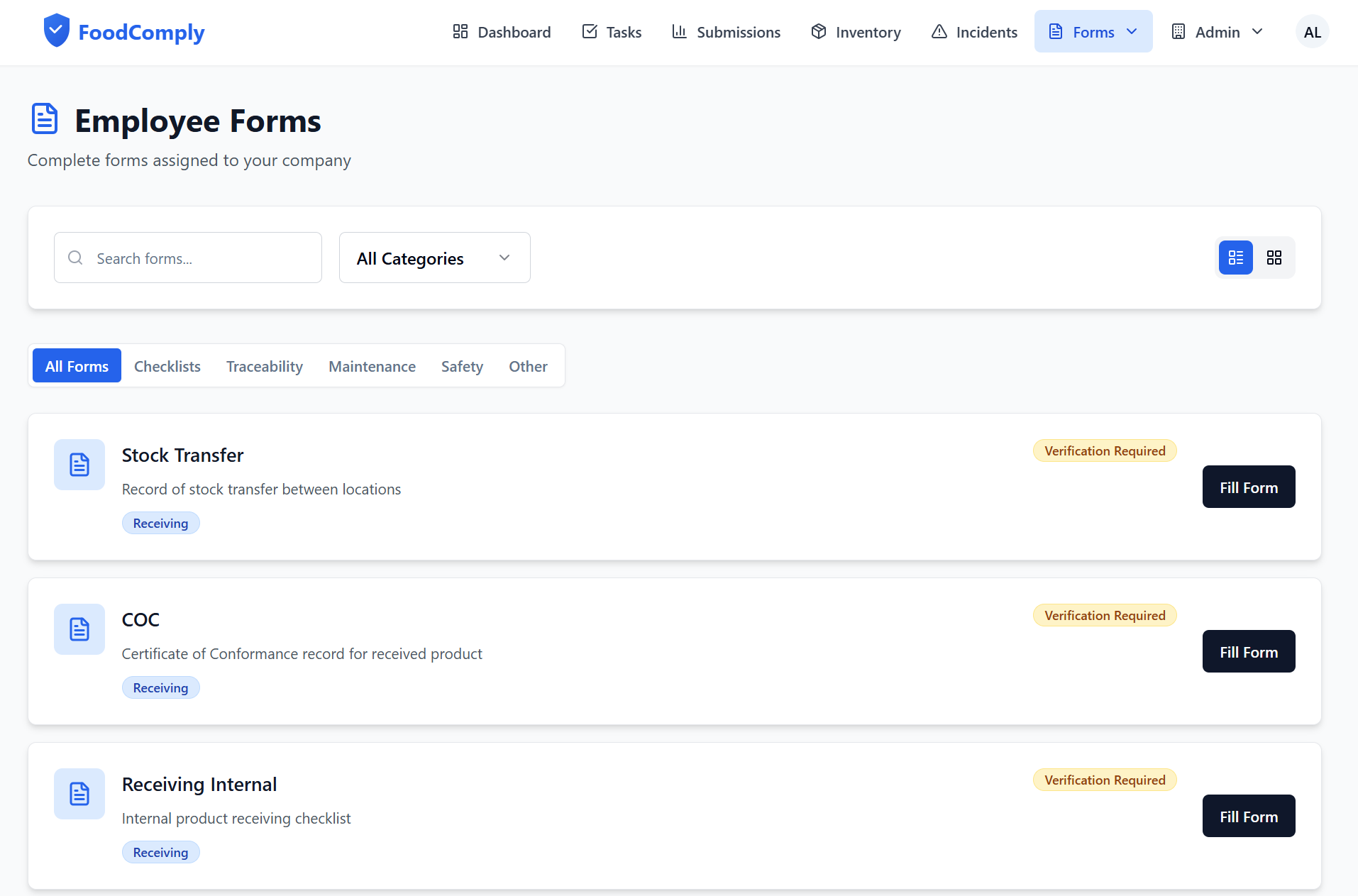
Modern digital platforms transform static paper checklists into dynamic, intelligent tools. These systems can:
- Guide users through procedures with conditional logic
- Require photographic evidence for critical steps
- Automatically flag deviations and trigger corrective actions
- Provide real-time feedback and training prompts
3. Automated Documentation and Traceability
Digital systems create comprehensive audit trails automatically. Every action, measurement, and decision is timestamped and attributed to specific users, creating unprecedented traceability throughout the food handling process.
Measurable Improvements in Accuracy
Key Accuracy Improvements
- • Elimination of Transcription Errors: Direct digital capture removes manual data transfer
- • Standardized Procedures: Consistent execution across all locations and staff
- • Validation Requirements: Systems can require specific data formats and ranges
- • Time-Stamped Records: Precise tracking of when actions were performed
- • Photo Documentation: Visual evidence supporting compliance claims
Enhanced Recall Capabilities
When food safety incidents occur, the ability to quickly identify affected products and trace their distribution is critical. Digital systems revolutionize recall management through comprehensive product traceability, rapid response coordination, and data-driven decision making.
Overall Food Safety Improvements
Operational Benefits
- • 60% reduction in compliance-related incidents
- • 75% decrease in manual documentation time
- • 90% improvement in audit preparation efficiency
- • 85% reduction in food waste from temperature deviations
Safety Outcomes
- • 100% audit pass rate for digital adopters
- • 50% faster identification of safety issues
- • 80% improvement in corrective action response time
- • 95% reduction in documentation-related violations
The Future of Food Safety
The digital transformation of food safety is accelerating, driven by advancing technology and increasing regulatory expectations. Organizations that embrace this digital revolution position themselves for success in an increasingly complex and regulated environment.
Ready to Transform Your Food Safety Operations?
Discover how FoodComply can help your organization join the digital food safety revolution.